Japanese Atrocities Across Asia
A comprehensive overview of Imperial Japan's war crimes and atrocities throughout Asia during its colonial expansion and World War II
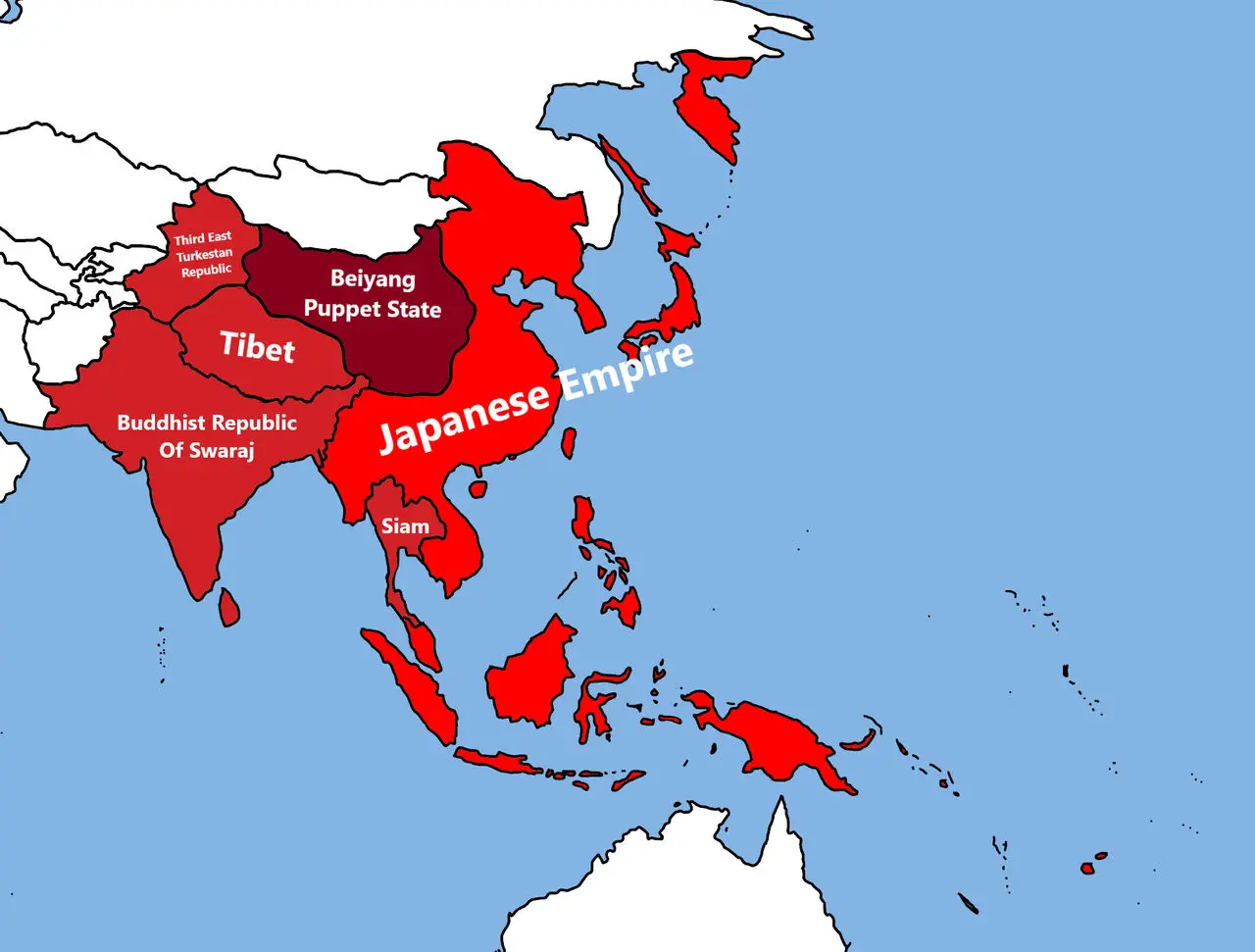
From the late 19th century to 1945, Imperial Japan's expansionist policies resulted in widespread atrocities across Asia. This map highlights the major regions affected by Japanese militarism during its colonial rule and wartime occupation.
Korea (1910-1945)
Japanese Colonial Occupation
Japan's 35-year colonization of Korea involved cultural suppression, forced assimilation, economic exploitation, and widespread human rights abuses.
- Forced Labor: Hundreds of thousands of Koreans were conscripted for labor in Japan and war zones.
- Comfort Women: Approximately 80-90% of "comfort women" were Korean, forcibly recruited for sexual slavery.
- Cultural Genocide: Korean language, names, and history were systematically suppressed.
Philippines (1942-1945)
Japanese Occupation
The Japanese occupation of the Philippines resulted in some of the most brutal atrocities in the Pacific theater.
- Manila Massacre (1945): Over 100,000 civilians killed during the Battle of Manila.
- Bataan Death March: 75,000 POWs forced on a 65-mile march; thousands died.
- Comfort Stations: Thousands of Filipino women forced into sexual slavery.
Indonesia (1942-1945)
Japanese Occupation
Japan's occupation of the Dutch East Indies (Indonesia) resulted in severe hardship for both the local population and European civilians.
- Forced Labor (Romusha): 4-10 million Indonesians conscripted; estimated 2.5 million died.
- Comfort Women: Indonesian women were systematically forced into sexual slavery.
- Resource Exploitation: Japan systematically plundered Indonesia's natural resources.
Japanese Aggression Against China (1931-1945)
The Second Sino-Japanese War and Japan's occupation of China resulted in some of the most horrific atrocities of the 20th century
The Rape of Nanking (December 1937 - January 1938)
Following the capture of Nanjing, Japanese forces engaged in six weeks of mass murder, rape, looting, and arson. This event stands as one of the worst atrocities of World War II.
-
Systematic Massacre
Japanese troops systematically rounded up and executed Chinese soldiers who had surrendered, as well as civilians. Mass graves were discovered throughout the city and surrounding areas.
Estimated deaths: 200,000-300,000Duration: 6 weeksRape victims: 20,000-80,000Source: "The Rape of Nanking" by Iris Chang; International Military Tribunal for the Far East
-
Destruction of Cultural Heritage
Approximately one-third of Nanjing's buildings were destroyed by fire. Libraries, temples, and historical sites were specifically targeted for destruction.
Unit 731 and Biological Warfare
Japan's covert biological and chemical warfare research unit conducted lethal human experiments and deployed biological weapons against Chinese civilians.
-
Human Experimentation
Prisoners were subjected to vivisection without anesthesia, frostbite testing, poison testing, and exposure to plague, cholera, and other diseases.
Victims: 3,000-12,000Location: Pingfang, HarbinDuration: 1936-1945Source: "Factories of Death: Japanese Biological Warfare 1932-45" by Sheldon H. Harris
-
Deployment of Biological Weapons
Unit 731 deployed plague-infested fleas over Chinese cities, causing outbreaks that killed an estimated 200,000-400,000 Chinese civilians.
Three Alls Policy (Sankō Sakusen)
The "Kill All, Burn All, Loot All" policy was implemented against communist base areas, resulting in massive civilian casualties and destruction.
Japanese Colonial Rule in Korea (1910-1945)
Cultural Suppression and Forced Assimilation
Japan's colonial policy aimed at eradicating Korean culture and identity. The Korean language was banned in schools and official settings, Koreans were forced to adopt Japanese names, and Shinto shrines were erected throughout Korea as part of spiritual colonization.
-
Forced Name Changes (1939-1945)
The Sōshi-kaimei policy forced Koreans to change their names to Japanese names. Those who refused faced discrimination in education, employment, and daily life. By 1944, approximately 84% of Koreans had been forced to change their names.
Policy Duration: 1939-1945Affected: 84% of KoreansPenalty for refusal: Social exclusionSource: "Japan's Colonization of Korea: Discourse and Power" by Alexis Dudden
-
Educational and Cultural Erasure
Korean history textbooks were rewritten to align with Japanese imperial narratives. The teaching of Korean language and history was prohibited. Over 200,000 Korean cultural artifacts were looted and taken to Japan.
Source: "Cultural Heritage and the Japanese Occupation of Korea" by Hyung Il Pai
Economic Exploitation and Forced Labor
Korea's resources were systematically extracted for Japan's benefit. Korean farmers were forced to grow rice for export to Japan, leading to famine in Korea while Japan enjoyed surplus. Hundreds of thousands of Koreans were conscripted as forced laborers.
-
Industrial and Military Conscription
From 1939, the National Mobilization Law allowed Japan to forcibly conscript Koreans for labor in Japan's mines, factories, and military construction projects. Conditions were brutal, with high mortality rates.
Conscripted: 800,000+ KoreansMortality rate: 10-30%Key sites: Mitsubishi mines, military factories -
Comfort Women from Korea
Korean women constituted the majority (estimated 80-90%) of the "comfort women" system. Many were deceived with promises of work or forcibly taken from their homes. Survivors report brutal conditions and repeated rapes.
Korean victims: 100,000-200,000Age range: Mostly 14-20 years oldSource: Korean Council for the Women Drafted for Military Sexual Slavery by Japan
Japanese Occupation of the Philippines (1942-1945)
The Manila Massacre (February-March 1945)
As American forces approached Manila, Japanese troops under Admiral Iwabuchi conducted a systematic massacre of Filipino civilians. The month-long rampage resulted in one of the worst urban atrocities of World War II.
-
Systematic Destruction and Murder
Japanese troops systematically burned neighborhoods, massacred families in their homes, and used civilians as human shields. They particularly targeted educated Filipinos, community leaders, and anyone suspected of anti-Japanese sentiment.
Duration: February 3 - March 3, 1945Civilian deaths: 100,000-500,000Buildings destroyed: 70% of ManilaSource: "Rampage: MacArthur, Yamashita, and the Battle of Manila" by James M. Scott
-
Massacres in Churches and Hospitals
Japanese troops violated sanctuaries, massacring civilians who had sought refuge in churches, convents, and hospitals. At St. Paul's Convent, 300 girls and nuns were raped and murdered. At Red Cross headquarters, patients and staff were bayoneted.
Source: Testimonies from the International Military Tribunal for the Far East
Bataan Death March (April 1942)
Following the surrender of the Bataan Peninsula, approximately 75,000 Filipino and American prisoners of war were forced to march 65 miles to prison camps under brutal conditions.
Surrender of Bataan
After months of fighting with inadequate supplies, 75,000 Filipino and American troops surrender to Japanese forces.
The Death March
Prisoners marched 65 miles with little food or water. Those who fell behind were beaten, bayoneted, or beheaded.
Camp O'Donnell
Survivors faced horrific conditions in overcrowded camps with inadequate food, water, and medical care.
Japanese Occupation of Indonesia (1942-1945)
Romusha Forced Labor System
The Japanese instituted the Romusha system, conscripting millions of Javanese and other Indonesians for forced labor on military projects throughout Southeast Asia.
-
Burma-Siam Death Railway
Approximately 200,000-300,000 Javanese Romusha were sent to work on the Burma-Siam Railway. Working conditions were brutal, with inadequate food, medical care, and shelter. Mortality rates exceeded 50%.
Javanese workers: 200,000-300,000Estimated deaths: 100,000+Mortality rate: 50%+Source: "The Burma-Thailand Railway: Memory and History" edited by Gavan McCormack and Hank Nelson
-
Agricultural and Resource Exploitation
Japan systematically requisitioned rice and other food supplies from Indonesian farmers, leading to widespread famine. The 1944-1945 famine in Java caused an estimated 2.4 million deaths.
Famine deaths: 2.4 millionFood requisition: 50-70% of harvest
Sexual Slavery in Indonesia
The Japanese military established an extensive network of "comfort stations" throughout Indonesia, forcing local women and girls into sexual slavery.
Japanese Occupation of Malaya and Singapore (1942-1945)
Sook Ching Massacre in Singapore (1942)
Following the fall of Singapore, Japanese forces launched Operation Sook Ching ("purge through cleansing") to eliminate anti-Japanese elements among the Chinese population.
-
Systematic Screening and Execution
Chinese males between 18-50 were required to report to screening centers. Those suspected of being anti-Japanese (based on arbitrary criteria) were taken to remote locations and executed.
Estimated deaths: 25,000-50,000Duration: February 21 - March 4, 1942Primary locations: Changi Beach, Sentosa, BedokSource: "The Japanese Occupation of Malaya and Singapore, 1941-45" by Paul H. Kratoska
-
Memorials and Recognition
Today, several memorials in Singapore commemorate the victims, including the Civilian War Memorial and the Changi Beach Park Massacre Site. The Japanese government has offered limited apologies but no official reparations to individual victims.
Forced Labor and Resource Extraction
Japan exploited Malaya's tin and rubber resources using forced labor. Thousands of Malayans and Indian Tamil workers were conscripted for military projects.
Japanese Occupation of French Indochina (1940-1945)
The 1945 Vietnamese Famine
Japan's requisition of rice for its military and forced conversion of rice fields to industrial crops led to a catastrophic famine in northern Vietnam.
-
Food Requisition and Policy Causes
Japan forced Vietnamese farmers to grow jute and other industrial crops instead of rice, while simultaneously requisitioning existing rice stocks for Japanese troops. When combined with Allied bombing of transportation networks and a poor harvest, this caused mass starvation.
Famine deaths: 1-2 millionPeak: March-May 1945Most affected: Tonkin (North Vietnam)Source: "The Great Vietnamese Famine of 1944-45" by Geoffrey Gunn
-
Humanitarian Catastrophe
Contemporary accounts describe streets filled with starving people, corpses in public places, and instances of cannibalism. The famine significantly influenced post-war Vietnamese politics and the rise of the Viet Minh.
Japanese Occupation of Burma (1942-1945)
Burma-Siam Death Railway
The Japanese used forced labor to construct a 415 km railway between Burma and Thailand to supply their forces. The project resulted in horrific loss of life.
-
Scale of Forced Labor
Approximately 180,000-250,000 Asian laborers (mostly Burmese, Malay, and Tamil) and 60,000 Allied POWs were forced to work on the railway. They faced brutal conditions, inadequate food, and rampant disease.
Total workers: 240,000-310,000Estimated deaths: 90,000-100,000Construction: 1942-1943Source: "The Railway Man" by Eric Lomax (survivor account)
-
Bridge on the River Kwai
The most famous section of the railway was the bridge over the River Kwai, immortalized in film. Prisoners worked 18-hour days in terrible conditions to complete this strategic crossing.
Pacific War: Japanese Atrocities Across the Pacific (1941-1945)
Japan's campaign across the Pacific Islands resulted in widespread atrocities against both military personnel and civilian populations
Treatment of Allied Prisoners of War
Japanese forces routinely violated international conventions regarding the treatment of prisoners of war throughout the Pacific theater.
-
Execution and Mistreatment of POWs
Allied prisoners were routinely beaten, starved, and used for forced labor. Many were executed, often by beheading, bayoneting, or shooting.
Allied POW deaths in Japanese camps: 27%Allied POW deaths in German camps: 4%Comparison: 7 times higher mortalitySource: "Prisoners of the Japanese: POWs of World War II in the Pacific" by Gavan Daws
-
Hell Ships
POWs were transported in cargo holds of unmarked ships without adequate food, water, or sanitation. Many ships were attacked by Allied forces unaware they carried prisoners.
POWs transported: 50,000+Estimated deaths: 21,000+
Atrocities Against Pacific Islanders
Civilian populations across the Pacific Islands suffered under Japanese occupation, with numerous documented massacres and atrocities.
Papua New Guinea
Cannibalism and Massacres
Japanese troops resorted to cannibalism against both Allied prisoners and local Papuans. Multiple massacres of villagers occurred throughout the territory.
Solomon Islands
Forced Labor and Executions
Local islanders were forced to labor for Japanese forces. Those suspected of aiding Allies were executed, often in brutal ways.
In Memoriam: A Call for Truth and Reconciliation
This historical archive stands as a solemn testament to the millions of Asian victims of Japanese militarism. From the coastal villages ravaged by Wokou pirates to the cities destroyed during World War II, from the comfort women forced into sexual slavery to the laborers worked to death on military projects - each life lost represents an irreplaceable human story cut short by aggression and cruelty.
We remember not to perpetuate hatred, but to honor the victims whose suffering has too often been minimized or forgotten. True reconciliation requires acknowledging historical truth, accepting responsibility, and ensuring such atrocities are never repeated.
As we confront this difficult history, we affirm the resilience of the human spirit and the possibility of healing. May the memory of those who suffered inspire us to build a future where human dignity is inviolable, where justice prevails over power, and where peace is built on truth rather than silence.
Let this archive serve as an educational resource and a call to action: to remember, to learn, and to work toward a world where such suffering becomes unimaginable.